
Peritoneal
Metastasis Center
Specialist assessment and treatment for patients with peritoneal metastases,
led by Yutaka Yonemura, M.D., Ph.D.
International physician training under Dr Yonemura
Am I Eligible for Treatment?
If you have been diagnosed with peritoneal metastases, your condition is within the scope of treatment at the Peritoneal Metastasis Center.
The focus is therefore on what treatment may be possible in your individual case.
How Will My Treatment Be Planned?
Your treatment strategy is developed after a detailed evaluation at Kishiwada Tokushukai Hospital.
Laparoscopic assessment by Dr Yonemura is required to evaluate the peritoneal disease and determine the Peritoneal Cancer Index (PCI).
The strategy is then adjusted according to your individual condition, findings, and response to treatment.
What Will My Treatment Involve?
Treatment is planned as an integrated programme by Dr Yonemura’s team. Depending on your individual condition and treatment response, this may include intraperitoneal chemotherapy, cytoreductive surgery (CRS), and HIPEC.
Each part of the treatment programme is planned in relation to the others. Your response to treatment is closely monitored and plays a central role in shaping what comes next.
Clinical findings and changes in your condition are considered alongside that response, allowing the strategy to be adjusted throughout the course of treatment.
Continuity of care with Dr Yonemura’s team is central to this approach.
What Should I Consider Before Choosing Treatment in Japan?
Treatment under Dr Yonemura’s team is not a short, single-procedure visit.
Patients should be prepared to stay in Japan for several weeks, and in some cases longer.
For international patients, treatment represents a substantial financial commitment. Patients should expect treatment costs to run well into the millions of yen.
International patients are treated on a fully self-pay basis.
Kishiwada Tokushukai Hospital does not accept foreign insurance, reimbursement schemes, public funding programmes, payment guarantees, or other third-party payment arrangements.
All treatment costs must be paid directly by the patient. This applies regardless of the type of insurance, funding, reimbursement, or payment-guarantee arrangement available in the patient’s home country. Individual exceptions cannot be made.
Being able to travel to Japan is a basic requirement for receiving care at Kishiwada Tokushukai Hospital. If your condition prevents you from making the journey, we cannot provide consultation, assessment, or treatment.
Patients and their families should carefully consider the time, financial commitment, and practical arrangements required for an extended course of treatment in Japan before deciding to proceed.
How Do I Begin?
Please submit only the medical information specifically requested by Kishiwada Tokushukai Hospital for pre-travel review.
If you decide to proceed, your patient record will be created at Kishiwada Tokushukai Hospital. Initial consultations with Dr Yonemura are held on Thursdays only, and your first consultation will be scheduled accordingly.
At the initial consultation, blood tests and contrast-enhanced CT are performed at Kishiwada Tokushukai Hospital under Dr Yonemura’s direction. These examinations are required even if similar tests have already been performed in your home country, as Dr Yonemura’s assessment is based on investigations performed according to his own clinical requirements.
Based on the findings of the initial consultation, laparoscopic assessment and intraperitoneal port placement may then be scheduled for the following week. Once laparoscopic assessment is scheduled, preoperative testing required by Kishiwada Tokushukai Hospital will also be carried out. As laparoscopic assessment is performed under general anaesthesia, this may include an electrocardiogram and other standard preoperative examinations.
The findings from the laparoscopic assessment are used by Dr Yonemura to determine the next stage of your treatment strategy. Your treatment programme is then discussed with you and proceeds according to those findings and your clinical condition.
What Do I Need to Understand Before Treatment in Japan?
Medical Coordination
International patients must use the medical coordination service appointed by Kishiwada Tokushukai Hospital. We do not accept independently arranged coordination services.
Treatment involves multiple appointments, examinations, procedures, hospital admissions, and possible schedule changes.
The medical coordinator serves as the main point of contact between you and the hospital and manages the exchange of essential medical information throughout your treatment. This includes the translation of important documents, transfer of medical images, appointment coordination, and communication of practical arrangements.
Medical Interpretation
To ensure patient safety, Kishiwada Tokushukai Hospital requires all medical interpretation to be provided by qualified medical interpreters. For English and Chinese, medical interpretation is arranged through qualified medical interpreters designated by Kishiwada Tokushukai Hospital.
Dr Yonemura and the International Medical Support Department can communicate in English, but many other hospital staff cannot. Interpretation is therefore required throughout examinations, procedures, admission, treatment, and other hospital interactions.
Family members and friends are not permitted to act as interpreters.
Patients who communicate in English must themselves have sufficient English ability to understand basic medical communication. Everyday conversational English alone is not sufficient. A family member’s ability to speak English does not replace this requirement.
If the patient requires interpretation in a language other than English or Chinese, the patient must arrange a qualified medical interpreter who can interpret between that language and English. Proof of professional medical interpreter certification must be submitted in advance.
During care at Kishiwada Tokushukai Hospital, a hospital-designated qualified medical interpreter will interpret between English and Japanese. When a language other than English or Chinese is required, interpretation may therefore involve two qualified medical interpreters:
⇄
English
⇄
Japanese
Where Should I Stay?
Your accommodation should be within walking distance of a station on the Nankai Main Line, between Izumiotsu Station (NK20) in the north and Izumisano Station (NK30) in the south. Kishiwada Tokushukai Hospital is located in the NK22 area.
🏥 Hospital · NK22 area
Izumiotsu · north
NK30
Izumisano · south
Please check the Nankai Main Line map before choosing your accommodation. You may choose your own accommodation within this area, but you must confirm the location with your medical coordinator before making any reservation.
Please do not book accommodation before receiving this confirmation.
Remote Treatment Planning and Second Opinions Are Not Provided
Dr Yonemura’s assessment is based on his own direct evaluation of the disease using his clinical approach and criteria. Medical records and imaging from other institutions alone do not provide the basis required for him to make that assessment.
Advice based on incomplete information would necessarily involve assumptions, which may lead to misunderstanding and would not serve the patient well.
This policy was introduced after repeated cases in which patients sought case-specific treatment recommendations remotely and then pursued treatment elsewhere without direct assessment by Dr Yonemura.
Using a treatment recommendation outside the clinical context in which it was developed can create misunderstanding, fragment care, and raise patient-safety concerns. It does not serve the patient’s best interests.
If you are seeking only treatment advice, a case-specific recommendation, or a second opinion without direct clinical assessment at Kishiwada Tokushukai Hospital, this service is not available and no exception can be made.
Dr Yutaka Yonemura
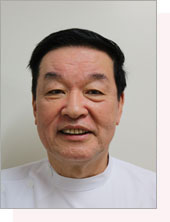
Director, Peritoneal Metastasis Center · 米村 豊
Dr Yonemura has dedicated his career to the treatment of peritoneal metastases, with particular focus on gastric cancer, pseudomyxoma peritonei, and peritoneal mesothelioma. His research encompasses cytoreductive surgery, HIPEC, and intraperitoneal chemotherapy.
International Academic Involvement
Peritoneal Surface Oncology Group International ↗
-
Gastric
Long-term survival after CRS combined with perioperative chemotherapy in gastric cancer with peritoneal metastases
-
Multi
CRS combined with perioperative intraperitoneal chemotherapy for peritoneal metastases from gastric cancer — PSOGI multi-institutional cohort
-
Gastric
Effects of neoadjuvant laparoscopic HIPEC for patients with peritoneal metastasis from gastric cancer
-
Gastric
Effects of neoadjuvant intraperitoneal/systemic chemotherapy (NIPS) in patients with gastric cancer with peritoneal metastasis
-
Gastric
Outcome data of patients with peritoneal carcinomatosis from gastric origin treated by bidirectional chemotherapy prior to CRS and HIPEC
-
History
History of peritoneal surface malignancy treatment in Japan
Specialist Surgeons in Peritoneal Metastases
Dr Fushida is a highly experienced gastrointestinal surgeon with particular expertise in surgery for peritoneal metastases. He plays a major surgical role in complex cytoreductive procedures performed by Dr Yonemura’s team.
Dr Fushida is certified by Japan’s major surgical societies as both a specialist and a supervising surgeon in general and gastrointestinal surgery. He is also certified in gastrointestinal cancer surgery and in the use of the da Vinci Surgical System for robotic surgery.
His work is closely connected with the field of peritoneal metastases. He serves as a Director of the Japanese Society for Peritoneal Dissemination and is a member of the committee responsible for developing clinical practice guidelines for peritoneal metastases.
Contact
If you are considering treatment in Japan, please use the Peritoneal Metastasis Center Fast Track enquiry form.
The form collects the clinical information needed for initial review at the first enquiry, helping to avoid unnecessary delays so that Dr Yonemura’s team can respond promptly.
Contact us from overseas
Start with a brief message to our International Medical Support Department.